Best Mobile Apps for Professional Development in 2025
JUNE 04, 2025

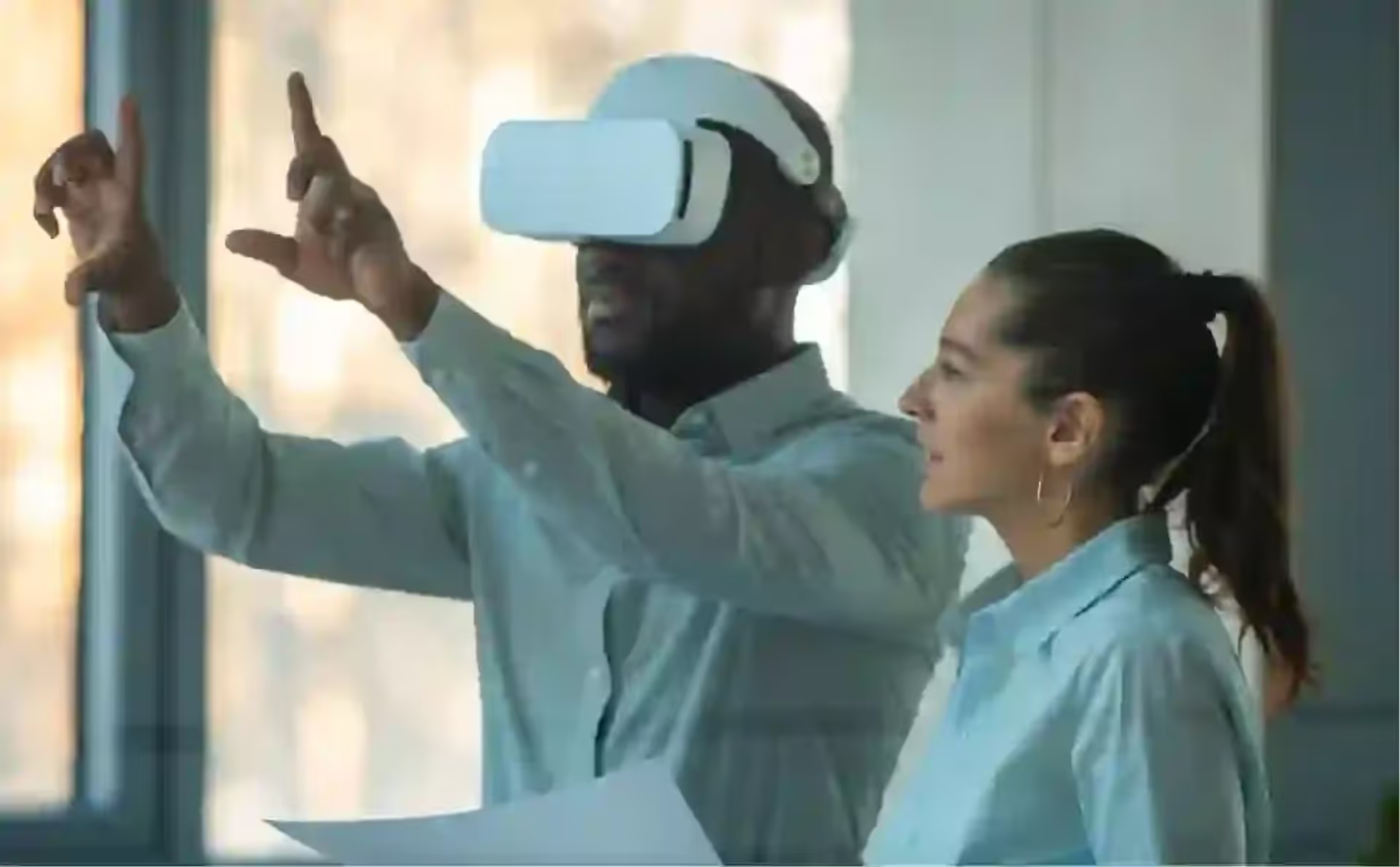
In an age marked by rapid digital transformation, the demands placed upon professionals are evolving at an unprecedented pace. Technological shifts, globalization, hybrid work models, and ever-changing regulatory landscapes mean that employees need to continuously upskill—not just to grow, but often to simply keep up. Traditional training approaches, while still valuable, are increasingly falling short in delivering the kind of agility, engagement, and retention required in today’s fast-paced corporate world. This is where Virtual Reality (VR) has emerged as a tr ansformative force.
Unlike passive learning methods—such as lectures or slide-based eLearning—VR creates fully immersive, experiential environments. Learners are no longer confined to reading manuals or watching demos; instead, they can actively interact with scenarios that mirror real-life challenges. Whether it’s managing a crisis, performing a complex technical procedure, or practicing soft skills under pressure, VR enables simulation-based training that feels real—without the risks, costs, or logistical hurdles.
Moreover, the global professional development landscape is shifting toward personalization, remote access, and scalability. As teams become distributed across geographies and time zones, VR offers a consistent and repeatable training model, accessible from anywhere. For enterprises, this translates into higher engagement, better knowledge retention, and faster skill acquisition, all while maintaining cost-effectiveness at scale.
COVID-19 accelerated the adoption of digital tools, but more importantly, it revealed the fragility of in-person, classroom-based training. This served as a wake-up call: organizations that invest in adaptive learning technologies such as VR are better positioned to respond to disruption and remain competitive.

According to PwC’s study on the impact of virtual reality in soft skills training, VR-trained employees learned four times faster than those in traditional classrooms and were 275% more confident to apply their skills after training. These numbers aren’t projections—they’re happening now. And they are just the beginning.
One of VR’s greatest strengths is its ability to deliver experiential learning. By engaging multiple senses and placing learners directly inside dynamic environments, VR enhances focus, minimizes distractions, and improves knowledge retention by up to 75%, according to industry studies. For example, a warehouse worker can learn how to handle hazardous materials or operate machinery in a virtual space that mimics real-world conditions, without real-world danger.
Moreover, VR enables scenario-based learning, ideal for professions that require high-stakes decision-making. Think emergency medical responders, pilots, or customer service managers under pressure. In VR, mistakes are learning opportunities—not costly errors. The immediate feedback and interactive format appeal to today’s adult learners who prefer active, autonomous learning experiences.
Whether you're onboarding 50 new hires across different countries or conducting annual compliance training for 5,000 employees, VR enables consistent, standardized instruction at scale. No need to fly trainers across continents or synchronize schedules across time zones. A VR headset and acces s to a content library can deliver the same learning outcomes to a user in Tokyo as one in Toronto.
Companies can also rapidly iterate and update training content without major operational overhauls. Need to reflect new safety regulations? Just push an update to the VR module—no need for reprinting manuals or retraining instructors.
In this sense, VR becomes not just a learning tool but a strategic business enabler. It reduces friction, speeds up onboarding, and allows companies to train faster without compromising quality.
At first glance, VR can appear to be a capital-intensive investment, especially when considering hardware, content development, and platform integration. However, the return on investment (ROI) for VR in training is increasingly well documented.
When comparing costs over time—including travel expenses, instructor salaries, venue rentals, printed materials, and lost productivity—VR training often proves to be significantly more cost-effective. As VR hardware becomes more affordable and cloud-based distribution expands, organizations are realizing that the initial investment quickly pays off through reduced downtime and improved performance outcomes.
A 2021 report by Accenture showed that organizations deploying VR training experienced a real ROI in under six months, with measurable improvements in employee retention, error reduction, and task completion speed.
Additionally, organizations can track performance and analytics in real time, using data from VR interactions to fine-tune future sessions. This adds a layer of intelligence to professional development that traditional training simply cannot offer.
This comprehensive guide is designed to offer an in-depth exploration of how virtual reality is reshaping the world of professional training and development. While much has been written about VR in entertainment and gaming, its application in workplace learning—particularly in sectors like healthcare, manufacturing, retail, education, logistics, and corporate leadership—remains underexplored in mainstream discourse.
The global EdTech market has witnessed explosive g rowth over the past decade, but no segment has generated as much buzz and long-term promise as Virtual Reality (VR). Once a niche for entertainment, VR is now becoming a mainstream tool in education and professional training, attracting substantial investment from venture capital firms, governments, and large technology enterprises.
According to HolonIQ, global EdTech inve stment surpassed $20 billion in 2023, with immersive learning technologies—including VR and AR—accounting for a rapidly growing share. In 2025, the market size for VR in education and training alone is projected to exceed $15 billion, as organizations seek new ways to upskill employees and deliver experiential learning at scale.
Why the Surge in VR Investments? Remote learning and hybrid work are here to stay, and VR bridges the engagement gap left by Zoom fatigue and slide decks. There's an increasing demand for personalized, simulation-based learning in high-stakes fields like medicine, aviation, manufacturing, and corporate leadership. Hardware costs are dropping rapidly. Devices like the Meta Quest 3, HTC Vive Focus 3, and Pico Neo offer enterprise-level performance at increasingly accessible price points. VR's integration with AI and Learning Management Systems (LMS) makes it a data-rich ecosystem, enabling personalized pathways, real-time analytics, and performance benchmarking.
EdTech-focused venture capital firms—such as Owl Ventures, Reach Capital, and Learn Capital—have poured millions into VR platforms like Labster (virtual science labs), Strivr (corporate VR training), and ENGAGE (virtual campuses and events). These startups are redefining what learning looks like, from high schools to Fortune 500 boardrooms.
Moreover, Big Tech is not sitting on the sidelines. Companies like Meta, Microsoft , Google, and Apple are heavily investing in spatial computing, XR ecosystems, and educational partnerships to shape the future of learning. The metaverse may still be evolving, but the foundations are being built in VR classrooms, corporate simulations, and virtual onboarding spaces.
The ROI of immersive technologies such as Virtual Reality (VR) is no longer speculative. Organizations across multiple industries have already demonstrated that VR-based training not only delivers superior learning outcomes but also drives measurable business impact—including reduced operational costs, improved employee productivity, and faster time-to-competence. In many cases, VR training recoups its implementation costs significantly faster than traditional classroom or e-learning approaches, making it a strategically sound investment in large-scale workforce development.
Below are real-world examples demonstrating how VR-enabled training generates clear and quantifiable returns.
Walmart partnered with Strivr to deploy VR training across more than 4,500 stores, reaching over 1 million employees. Training modules focused on customer interaction, promotional readiness, health and safety protocols, and crisis management.
The use of VR allowed Walmart to expose employees to real-world scenarios—such as managing Black Friday crowds and responding to emergency situations—without physical risk.
Impact highlights:
By minimizing onboarding duration and reducing turnover, Walmart realized significant cost savings in both training operations and workforce replacement costs, reinforcing VR’s role as a productivity multiplier. According to leadership feedback, the investment paid itself back rapidly due to improved preparedness and reduced talent attrition.
Boeing introduced VR training to help technicians master complex aircraft wiring and assembly. Previously, this training required extensive job shadowing—with high risk of rework due to novice errors.
Through VR, employees practiced critical assembly steps in a simulated environment, receiving guided correction in real time.
Quantifiable results:
These improvements directly translated into lower production rework costs, reduced safety risks, and faster onboarding, yielding a high ROI for Boeing in both efficiency and quality control.
During the pandemic, Accenture deployed its immersive “Nth Floor” virtual campus to onboard thousands of employees across different regions. Instead of conducting siloed remote onboarding sessions, new hires could enter shared virtual spaces, collaborate, and participate in structured training simulations.
Key business outcomes:
The success of this initiative led to VR becoming a core component of Accenture’s onboarding ecosystem. By lowering in-person training dependency and improving talent retention, the organization achieved a cost-efficient, scalable onboarding process well suited for a distributed workforce.
DHL adopted VR simulation-based training for logistics staff to optimize warehouse processes, improve safety practices, and enhance package handling accuracy. Training scenarios simulated fast-paced warehouse environments, allowing employees to practice without affecting live operations.
Performance metrics show:
Improved workforce readiness and reduced operational disruptions helped DHL optimize logistics operations and scale best practices globally, driving meaningful returns from the implementation.
Across industries, VR-based training delivers three core ROI drivers:
Beyond financial metrics, immersive training enhances employee confidence, safety, and engagement—making it a high-impact choice for organizations pursuing scalable workforce readiness.
As businesses continue to adapt to digital transformation and skills shortages, investment in VR and immersive learning is becoming not just innovative, but strategically essential.
The global acceleration of VR-based learning and training is driven not only by technological innovation but also by strategic financial support from both governments and enterprises. Public policy frameworks and corporate investment strategies increasingly recognize immersive technology as a catalyst for skill development, workforce readiness, and educational reform. The result is a surge in initiatives designed to expand access to VR-enabled learning at national, sectoral, and organizational levels.
Governments across the world are now prioritizing digital transformation in education and training. VR, recognized as a high-impact tool for experiential learning, is increasingly included in funding schemes and policy frameworks aimed at closing skills gaps, improving learning outcomes, and preparing economies for automation and technological disruption.
The U.S. Department of Education provides funding through the Education Innovation and Research (EIR) program, supporting research into immersive and adaptive learning technologies. Meanwhile, the Department of Defense and Department of Homeland Security actively deploy VR simulations to train soldiers, emergency responders, and cybersecurity specialists, demonstrating its effectiveness in mission-critical environments.
Through the Workforce Innovation and Opportunity Act (WIOA), VR-based training programs are now eligible for federal workforce funding. Many community colleges and training centers partner with employers to deliver VR-enabled upskilling and reskilling initiatives, particularly in advanced manufacturing, healthcare, logistics, and infrastructure.
The EU’s Digital Education Action Plan 2021–2027 places strong emphasis on integrating extended reality (XR) technologies—such as VR and AR—into national education systems. This includes funding pilot projects, teacher training programs, and integration with digital assessment tools.
Additionally, Horizon Europe, the EU’s leading research and innovation program, funds universities, EdTech startups, and industry consortia developing VR-based training solutions in healthcare, engineering, sustainability, and green technology sectors. These initiatives aim to both support digital competitiveness and enhance employability across member states.
[banner]
China has rolled out VR-enabled education pilot programs in over 1,000 public schools and vocational institutions, focusing on STEM subjects, engineering, and vocational training. Singapore’s SkillsFuture Initiative offers partial government funding and tax credits for companies adopting immersive learning technologies as part of their digital transformation strategies. South Korea has introduced R&D grants, tax incentives, and national-scale partnerships to encourage the use of VR for workforce development in industries such as automotive engineering, aerospace, and medical training.
These public sector initiatives demonstrate a major policy shift toward supporting immersive learning. Government-backed funding reduces adoption barriers for educational institutions and drives industry-wide innovation, making VR more accessible to schools, healthcare facilities, technical institutes, and training centers.
Large organizations are not waiting for policy frameworks to mature—they are actively investing in immersive learning ecosystems to build future-ready workforces and improve operational efficiency. Rather than using VR in isolation, many enterprises integrate it as part of a broader digital learning strategy alongside AI, analytics, and cloud technologies.
Importantly, enterprise adoption is often part of a long-term, multi-tier learning strategy. Companies typically complement VR with AI-based personalization, data-driven performance tracking, and LMS or cloud integration to ensure consistent skill development at scale.
Government-supported funding lowers the adoption barrier for educational institutions, while enterprise-driven investment ensures rapid, market-relevant implementation. Together, these initiatives accelerate the evolution of immersive learning and position VR as a mainstream component of global workforce and education systems.
The convergence of policy support, corporate innovation, and technological maturity signals a transition from experimental use to strategic deployment of VR as a standard training and development tool, driving measurable ROI, productivity gains, and long-term competitiveness.
Virtual Reality (VR) is not just a flashy technological innovation — it is grounded in well-established pedagogical principles that align closely with how adults learn best. In particular, VR leverages the power of experiential learning, spatial cognition, and embodied interaction, making it a uniquely powerful tool for professional development and lifelong learning.
At the heart of VR’s effectiveness in training environments lies its alignment with adult learning theory, particularly the principles articulated by Malcolm Knowles in his concept of andragogy. Knowles emphasized that adult learners are self-directed, goal-oriented, and bring a wealth of prior experience into the learning process. They are also highly motivated when they see the immediate relevance of what they’re learning to their personal or professional lives.
VR taps into these core attributes in several ways: Autonomy: VR simulations often allow learners to explore environments at their own pace, making choices and experiencing the consequences of their actions. Relevance: Simulated tasks in VR are often job-specific or scenario-based, ensuring that learning is contextual and applicable. Experience-based learning: Rather than passively consuming information, users are immersed in situations that require critical thinking, problem-solving, and real-time decision-making.
This approach aligns closely with David Kolb’s experiential learning cycle, which emphasizes four key stages: concrete experience, reflective observation, abstract conceptualization, and active experimentation. VR naturally cycles learners through these phases by enabling them to perform tasks, reflect on outcomes, adapt strategies, and repeat actions in a controlled yet dynamic environment.
For example, a healthcare professional practicing in a VR triage simulation experiences immediate, immersive pressure while treating virtual patients. After completing the scenario, they can debrief, analyze what went right or wrong, and re-enter the simulation to apply their new understanding. This iterative loop is far more impactful than traditional, lecture-based training models.
From a neurological and psychological standpoint, VR enhances learning through multisensory engagement and embodied cognition. It is well established that humans process spatial information more effectively when they physically interact with their environment — a phenomenon known as spatial learning. VR enables learners to “move through” information, activating not just memory centers but also motor pathways, which supports muscle memory and procedural recall.
In fields like manufacturing, emergency response, surgery, or aviation, this is critical. Learners can simulate physically complex or hazardous procedures repeatedly until their responses become instinctual. For instance: A surgeon practicing in VR not only visualizes anatomy but also performs precise motor movements with haptic feedback. A pilot in a flight simulator processes spatial information such as altitude, speed, and orientation, strengthening neural pathways tied to spatial reasoning and reaction timing.
Beyond procedural skills, VR improves engagement and focus. The immersive nature of VR reduces distractions and increases learner presence, making it easier to maintain attention during training. Studies have shown that learners in immersive environments show higher knowledge retention rates — often 30–40% higher than in traditional classroom settings.
Moreover, emotional engagement plays a critical role in memory formation. VR can simulate high-stakes or emotionally charged situations (e.g., handling a dissatisfied customer, managing a medical crisis), creating lasting impressions that enhance long-term knowledge retention and empathy development.
While VR presents groundbreaking educational opportunities, it is essential to recognize and address barriers to access and equity in deployment. Not all learners or institutions have the same access to high-end devices, high-speed internet, or private learning spaces. If not carefully planned, VR implementation could unintentionally widen the digital divide.
To foster equitable access, developers and educational institutions must consider: Hardware cost and compatibility: Not all learners can afford advanced headsets like the Meta Quest Pro or HTC Vive. Designing content that functions on mobile-based VR (e.g., Google Cardboard or low-end standalone headsets) can extend access to underserved populations. User experience for diverse populations: VR platforms must prioritize universal design principles, including support for users with visual, auditory, or mobility impairments. This includes voice navigation, subtitles, controller alternatives, and customizable UI/UX interfaces. Cultural inclusivity: Scenarios and avatars used in VR training should reflect diverse cultural, gender, and age groups to avoid bias and promote inclusion. Content localization: VR applications must consider multilingual support and local context—especially for global companies deploying VR training across different regions.
Additionally, ethical considerations such as data privacy, emotional safety, and psychological impact are increasingly important as VR becomes more immersive. It is vital to ensure that experiences — particularly those involving trauma simulations or high-pressure environments — include opt-out mechanisms, debriefing sessions, and support resources.
Forward-thinking organizations are already taking action. For example, the XR Access Initiative in the United States promotes best practices for inclusive design in immersive learning, while many public institutions are developing shared VR labs to democratize access to expensive tools.
As virtual reality (VR) continues to mature, its practical applications across professional domains have grown exponentially. Today, VR is not just a futuristic concept—it is a proven tool used by organizations globally to upskill employees, reduce operational risks, and improve workforce performance. This section explores real-world applications of VR training across key industries and skill areas, showcasing how immersive learning can deliver measurable outcomes.
In healthcare, VR is revolutionizing the way medical professionals learn, rehearse, and refine complex procedures. From surgery to emergency medicine, VR offers a safe, controlled environment where practitioners can practice high-stakes tasks without risking patient safety.
Surgical Simulation: VR platforms such as Osso VR and FundamentalVR allow medica l students and surgeons to perform highly detailed, tactile simulations of surgeries ranging from orthopedic procedures to robotic-assisted techniques. These platforms offer feedback on precision, speed, and efficiency—metrics that can be tracked over time to measure progress.
Emergency Response Training: Paramedics, nurses, and ER teams can simulate mass casualty events, cardiac arrests, or trauma cases. In such simulations, teams practice split-second decisions, triage procedures, and communication protocols, which are critical for real-world readiness.
Mental Health & Empathy Training: VR is also being used in psychology and social work training to help professionals experience the perspective of patients dealing with anxiety, PTSD, or cognitive impairments. This fosters empathy and improves patient-provider interactions.
The benefits are clear: faster learning curves, reduced training costs, and significantly improved knowledge retention rates. With the ability to repeat procedures without resource constraints, VR is becoming an essential pillar in modern medical education and continuing professional development.
In the manufacturing sector, workplace safety and operational efficiency are non-negotiable. VR helps mitigate risk by providing immersive, hands-on training environments where employees can learn to operate machinery, follow safety protocols, and react to emergencies—without any actual danger.
Equipment Operation: VR can simulate forklifts, assembly lines, and heavy industrial machinery, allowing employees to develop muscle memory before ever touching the real equipment.
Hazard Recognition: Simulations can recreate high-risk environments such as chemical spills, electrical faults, or fire scenarios, helping workers identify and respond to hazards more effectively.
Maintenance Training: Technicians can explore the internal components of machines in 3D, learning diagnostics, repairs, and preventive measures interactively.
Not only does VR reduce the costs associated with physical training facilities, but it also decreases accident rates by ensuring that employees are well-practiced in emergency and operational procedures before entering hazardous environments.
Soft skills development is one of the fastest-growing areas of VR training, particularly in corporate and customer-facing roles. These simulations focus on interpersonal communication, emotional intelligence, conflict resolution, and decision-making.
Leadership Development: VR scenarios place managers in realistic workplace dilemmas—such as giving performance feedback or resolving team conflicts—requiring them to demonstrate empathy, communication, and critical thinking. Platforms like STRIVR and Talespin are leading in this area, with AI-driven avatars responding dynamically to the learner’s behavior.
Sales Training: Sales representatives can simulate client meetings, objection handling, and product demonstrations in a VR environment that mimics real-world distractions and pressure. The goal is to build confidence and improve persuasion skills through repetition and feedback.
Customer Service: Frontline staff can practice handling difficult customers, resolving complaints, and de-escalating tense situations. With voice recognition and branching dialogue paths, these simulations prepare employees for diverse interactions and customer personas.
VR’s immersive nature helps employees internalize soft skills faster than traditional role-play or e-learning modules, making it a powerful tool for behavioral change and emotional resilience.
Jobs that rely heavily on technical knowledge—such as aerospace, automotive, telecommunications, or utility services—are increasingly leveraging VR for detailed simulation-based training. These roles often require a combination of theoretical understanding and physical coordination, which VR is uniquely positioned to support.
Mechanical and Electrical Maintenance: Trainees can practice troubleshooting electrical panels, HVAC systems, or turbine engines in simulated 3D environments. This supports faster upskilling without putting equipment at risk.
Aerospace and Aviation: Pilots and aerospace engineers use VR flight simulators to rehearse takeoffs, landings, in-flight malfunctions, and cockpit procedures. These simulations replicate real-time pressure and require exacting responses, improving readiness for critical scenarios.
Construction and Engineering: Engineers can walk through virtual blueprints, inspect 3D models of infrastructure, and visualize mechanical systems in real scale. This not only aids training but also enhances design collaboration and error detection.
The advantage is clear: learners engage with realistic systems in environments that are low-risk but high-fidelity, allowing them to gain confidence and reduce on-the-job errors.
Compliance training has traditionally been perceived as dry, box-ticking exercises, but VR is reshaping it into an engaging and impactful experience. Organizations in finance, healthcare, energy, and public sectors use VR to simulate ethical dilemmas, regulatory scenarios, and crisis response exercises.
Data Security and Privacy: Employees learn how to identify phishing attempts, avoid breaches, and secure sensitive information in a realistic office environment where mistakes can be safely made and corrected.
Diversity, Equity & Inclusion (DEI): VR modules allow users to experience workplace bias or microaggressions from different perspectives, fostering empathy and behavioral change.
Crisis Simulations: Leaders can practice navigating PR disasters, supply chain disruptions, or cybersecurity incidents in real-time scenarios that require strategic decision-making and stakeholder communication.
Because these topics often involve abstract concepts or legal jargon, VR’s storytelling and immersion help employees retain information and understand the real-world implications of non-compliance more effectively.
Virtual reality in professional development is no longer experimental—it’s actively being implemented by some of the world’s largest and most innovative companies. These organizations are leveraging VR to improve training outcomes, lower operational risks, and build more resilient workforces. The following real-world case studies illustrate how global enterprises and pioneering EdTech startups are transforming employee learning using immersive technology.
Johnson & Johnson: Revolutionizing Surgical Training
One of the most well-known applications of VR in healthcare training comes from Johnson & Johnson, which developed an advanced VR surgery simulator in partnership with Osso VR. This simulation platform enables orthopedic surgeons and residents to practice complex procedures with haptic feedback, realistic 3D anatomy, and step-by-step guidance.
The impact has been profound: a study published in The Journal of Bone and Joint Surgery found that participants trained using VR demonstrated a 230% improvement in overall surgical performance compared to those who trained through traditional methods. The program is scalable across hospitals, universities, and international medical schools, ensuring that thousands of medical professionals receive standardized, high-quality training regardless of geography.
This initiative reflects how major healthcare companies are investing in immersive learning to reduce surgical errors, accelerate skill development, and prepare for the demands of next-generation medicine.
Walmart: Training Over a Million Associates with VR
Walmart has emerged as one of the largest corporate adopters of VR for frontline employee training. Through a partnership with Strivr, a leading immersive learning startup, Walmart deployed VR headsets in more than 4,700 U.S. stores to train over 1 million associates.
The VR modules cover topics like customer service, conflict resolution, Black Friday readiness, and team management. Employees are placed in realistic retail scenarios that test their ability to respond under pressure—whether handling irate customers or managing long queues at checkout.
According to Walmart, VR-trained associates scored higher on assessments, retained information longer, and reported greater confidence in performing their roles. Additionally, the company observed faster onboarding times and improved team collaboration. This case is a powerful example of how VR can make soft skills training scalable and effective across a massive, distributed workforce.
Boeing and Airbus: Immersive Cockp it and Aircraft Maintenance Simulations
In the aviation industry, both Boeing and Airbus have integrated VR into their training programs to address the complexity of pilot training, cockpit familiarization, and aircraft maintenance.
Boeing utilizes VR to teach electrical wiring maintenance procedures, allowing technicians to visualize and practice working with the thousands of feet of wiring found in commercial jets. By using interactive VR environments instead of physical mockups, Boeing has reduced training time by nearly 30%.
Airbus uses VR and mixed reality tools to train pilots in cockpit procedures, emergency response, and aircraft turnaround operations. This approach helps standardize training across global locations while offering a safe space to practice responses to engine failures, instrument malfunctions, or extreme weather scenarios.
For both companies, VR not only enhances safety and technical proficiency but also significantly reduces training costs and minimizes aircraft downtime, which translates to major ROI in a high-stakes industry.
EdTech Startups Leading the Charge: Strivr and Talespin
Beyond the enterprise giants, a new wave of EdTech startups is driving the innovation and adoption of VR in corporate training. Two standout examples are Strivr and Talespin, each offering unique solutions for immersive learning.
Strivr (used by Walmart, Verizon, and Bank of America) specializes in enterprise-scale VR training focused on behavioral, customer service, and leadership skills. Their platform includes built-in analytics to track engagement, decision-making, and performance metrics. Strivr coined the term “Immersive Learning” to define this new methodology that combines VR, cognitive science, and data analytics.
Talespin focuses on soft skills development through storytelling and AI-powered avatars. Learners engage in branching dialogues with hyper-realistic virtual characters who express emotion and adapt their responses based on user input. Use cases include delivering performance feedback, negotiating salaries, or managing team morale. Talespin’s simulations help HR teams and L&D leaders address skills gaps in emotional intelligence and interpersonal communication.
These startups exemplify the agility and vision needed to bring cutting-edge VR learning tools to market. Their platforms offer plug-and-play scalability, making immersive training accessible not only to Fortune 500 firms but also to mid-sized companies seeking competitive upskilling solutions.
As virtual reality (VR) continues to gain traction in professional development, organizations are increasingly focused on one critical question: Does it work? Measuring the impact of VR training is not just a matter of tracking usage or satisfaction; it requires a structured evaluation of how immersive learning translates into retention, behavioral change, skills application, and ultimately, return on investment (ROI). This section explores the frameworks and evidence that define VR's effectiveness compared to traditional training methods.
The success of any training initiative depends on how well it translates knowledge into practical, on-the-job skills. In the context of VR, this involves a blend of cognitive science and data analytics. Three key metrics consistently emerge as focal points when assessing VR learning outcomes:
Knowledge Retention: Numerous studies have demonstrated that VR significantly improves memory retention. This is due in part to the multi-sensory, immersive experience that engages the brain in deeper, more active learning. For example, PwC’s 2020 study on VR learning showed that learners trained in VR retained information 275% more effectively than those trained via e-learning and traditional classrooms.
Skills Transfer: VR’s ability to simulate real-world environments makes it an ideal platform for practicing hands-on skills. From surgical suturing to customer service role-playing, learners engage in contextual practice that closely mirrors job situations. Metrics such as time to proficiency, task completion rates, and error reduction are commonly used to measure how well VR-trained employees apply their skills on the job.
Behavioral Change: Perhaps the most powerful application of VR lies in modifying attitudes and responses. Unlike static video or lecture-based training, VR allows individuals to emotionally engage with scenarios—whether navigating ethical dilemmas or managing workplace conflict. Companies use pre- and post-training assessments, 360-degree feedback, and in-role observations to track behavioral improvements driven by immersive simulations.
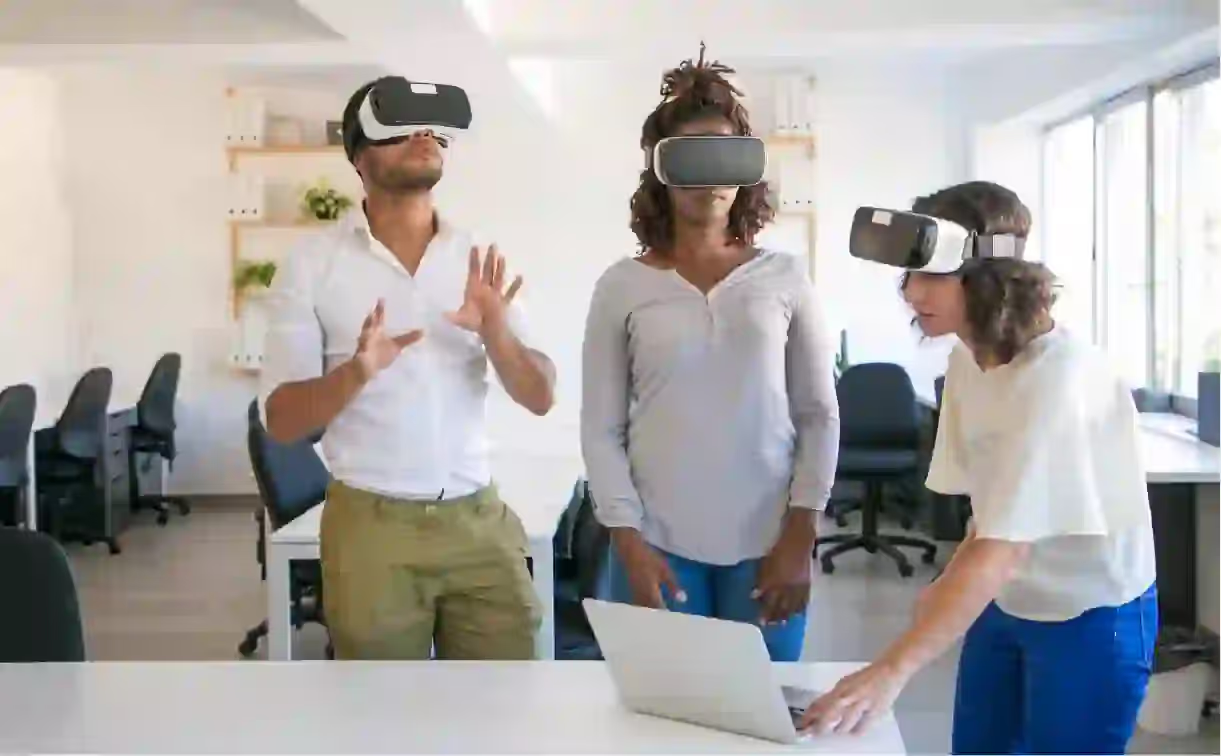
To justify large-scale investments in VR, organizations often turn to ROI comparisons. Several case studies from major industries reveal not only the efficacy but also the cost efficiency of immersive learning over time.
PwC compared the cost and impact of VR training to e-learning and classroom instruction in soft skills development. While VR had higher upfront development costs, the study found that VR-trained employees were 4x faster to train, 3.75x more emotionally connected to the content, and 275% more confident in applying new skills. When scaled to larger groups (375+ learners), VR became more cost-effective than classroom training.
KFC’s “The Hard Way” VR experience trained employees on cooking procedures and safety protocols. According to KFC, employees completed the training in half the time compared to the traditional method, while demonstrating higher engagement and recall. The cost savings on training time, combined with improved compliance, led to rapid ROI across hundreds of locations.
Airbus, in training its aircraft maintenance crews, found that VR simulations reduced the need for physical prototypes and in-person instruction. This not only cut costs but improved training scalability across international teams, leading to improved uptime and fewer mechanical issues in the field.
Short-term metrics are compelling, but the true test of VR’s impact lies in its sustainability over time. That’s why longitudinal studies are critical to understanding how immersive learning holds up against evolving workplace needs and job functions.
Academic and industry researchers are increasingly conducting 6-month, 12-month, and multi-year follow-ups on VR training cohorts. These studies typically track: Skill degradation over time compared to other modalities. Behavior consistency in real-world settings. Performance benchmarks, such as error rates or customer satisfaction, linked back to training exposure.
One notable longitudinal study from the University of Maryland assessed spatial memory retention in VR environments over a one-year period. Results indicated that learners trained in immersive 3D environments not only retained spatially oriented information longer, but also demonstrated faster reacquisition of forgotten material when retrained in VR.
Similarly, companies like Strivr offer built-in analytics dashboards that provide long-term data tracking across employee cohorts. This includes heat maps of eye movement, decision-making patterns, and engagement scores—giving L&D teams continuous feedback loops to refine content and delivery.
VR’s impact on professional development can no longer be viewed through anecdotal lenses or surface-level engagement stats. The data—ranging from higher knowledge retention and faster upskilling to demonstrable ROI and long-term behavior change—proves that immersive learning is not only effective but often superior to traditional approaches in many key areas.
As VR technology continues to evolve, and as analytics become more granular and predictive, organizations will gain even deeper insight into the ROI and transformational power of immersive training. The result is a smarter, safer, and more agile workforce—ready to thrive in the future of work.
Related posts
Best Mobile Apps for Professional Development in 2025
JUNE 04, 2025
Best Platforms for Online Learning Professionals: Overview and Investment Opportunities
MAY 28, 2025
Corporate Learning Ecosystems: Integration and Effectiveness in the Future of EdTech
MAY 26, 2025
Top EdTech Companies Revolutionizing Education Today
MAY 21, 2025
Exploring Career Opportunities in Ed Tech
APRIL 01, 2025