M&A in EdTech: Why Major Tech Companies Are Acquiring Learning Platforms
NOVEMBER 19, 2025
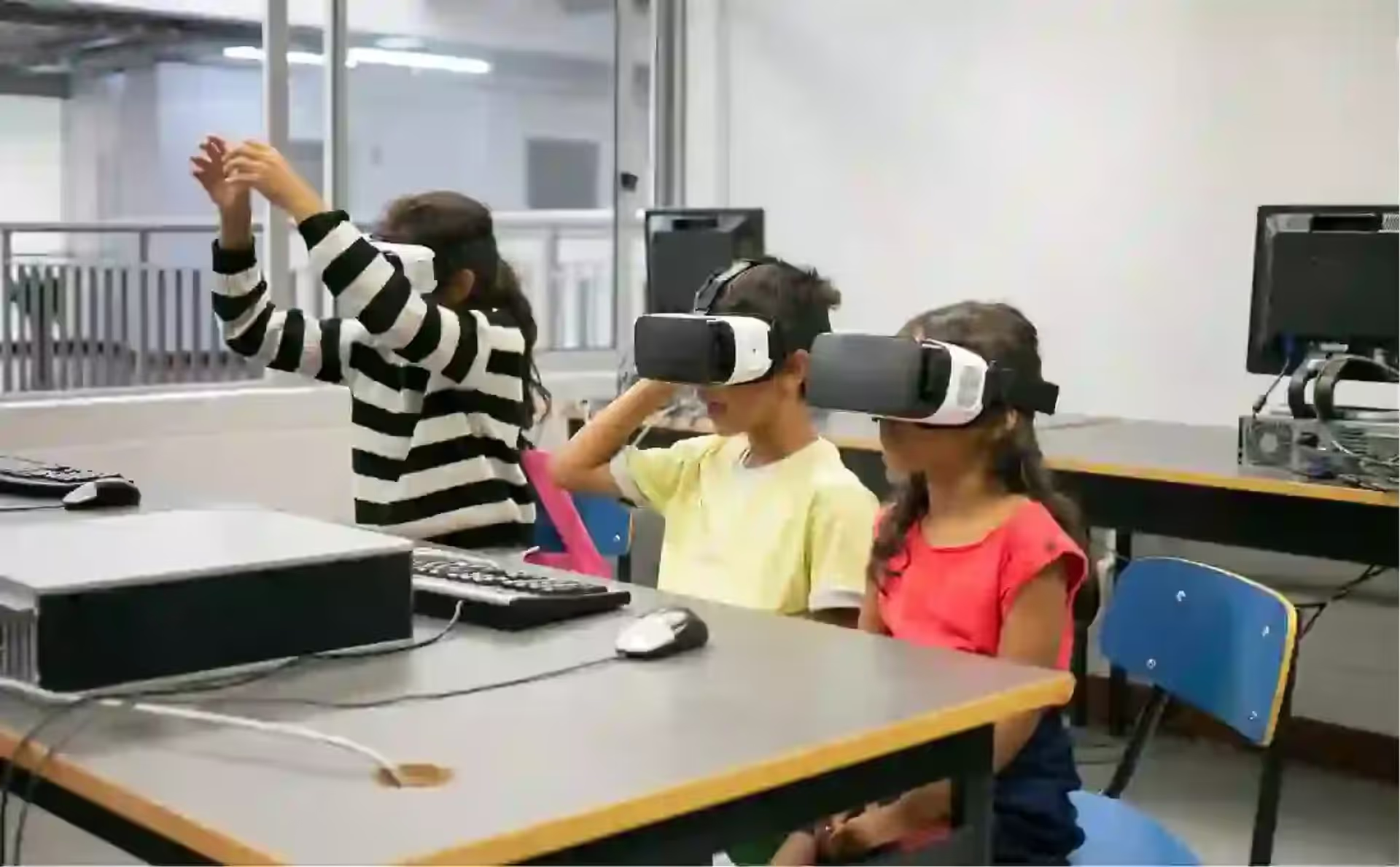
The integration of Virtual Reality (VR) and Augmented Reality (AR) into educational sett ings is revolutionizing the way students learn and educators teach. These immersive technologies are no longer futuristic concepts—they are rapidly becoming essential tools in modern classrooms and lecture halls. From dissecting virtual frogs in biology class to touring ancient Rome in history lessons, VR and AR offer students the chance to interact with content in ways that were once impossible.
As the digital-native generation demands more interactive and personalized learning experiences, the pressure is on for schools, universities, and investors to keep pace. Institutions that embrace these technologies are seeing increased student engagement, better knowledge retention, and a more inclusive approach to education. For forward-thinking investors and innovators, this is not just a technological shift—it’s a massive, unfolding opportunity to reshape the future of global education.
In this article, we explore why VR and AR are rapidly gaining ground in schools and universities, which sectors are ripe for investment, and how these tools are transforming learning into something far more immersive, effective, and scalable than ever before.
The Rise of VR and AR in Education. Recent years have witnessed a substantial increase in the adoption of VR and AR technologies in educational institutions worldwide. According to MarketsandMarkets, the global AR and VR in education market was valued at USD 2.9 billion in 2022 and is projected to reach USD 14.2 billion by 2028, growing at a CAGR of 29.6% during this period. This growth is driven by the need for immersive learning experiences that can cater to diverse learning styles and improve educational outcomes.
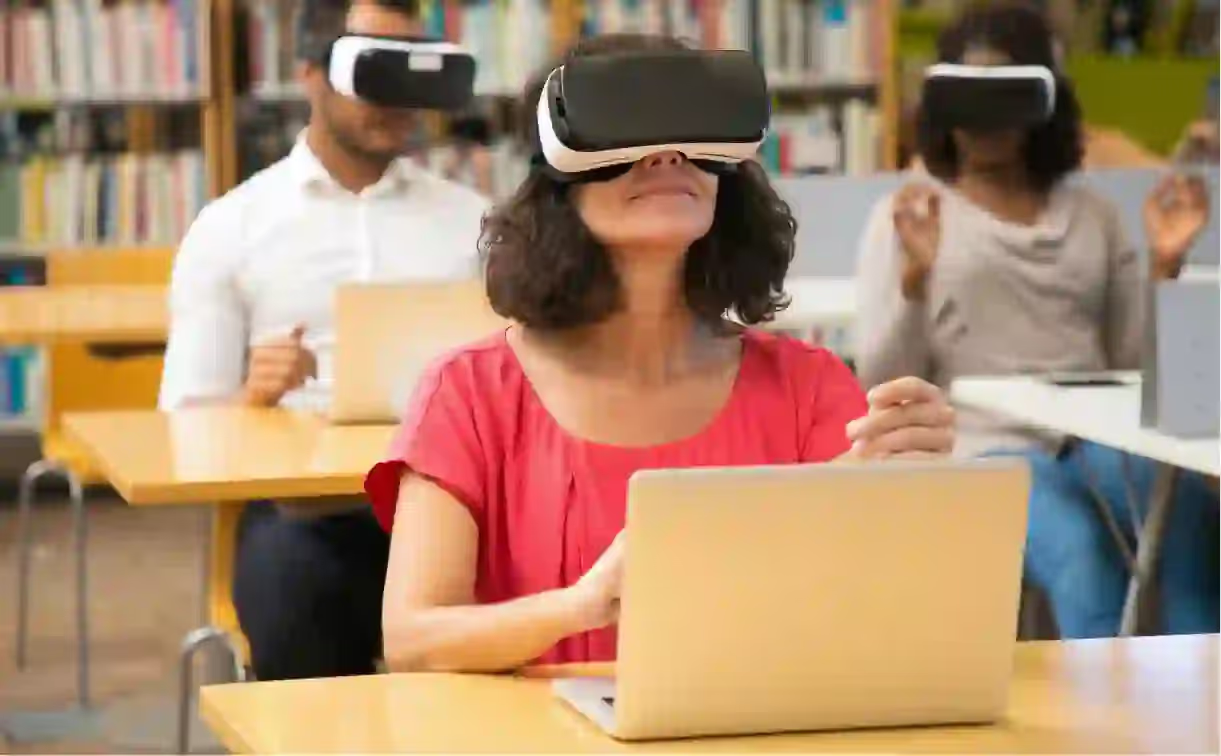
Virtual Reality (VR) and Augmented Reality (AR) are no longer experimental classroom accessories—they represent a fundamental shift in how knowledge is delivered, experienced, and retained. Their true value lies not in technological novelty but in their ability to drive deeper cognitive engagement, improve learning outcomes, and better prepare students for workforce realities. For investors, the acceleration of immersive learning technologies presents significant opportunities, particularly as institutions seek scalable solutions that enhance quality while reducing long-term training costs.
Below are the key benefits VR and AR bring to school and university environments, expanded with deeper insight and practical relevance.
In summary, VR and AR technologies do more than enhance engagement—they build stronger knowledge retention, expand access, accelerate skill acquisition, and offset costly training infrastructures. For investors, institutions, and policymakers alike, these immersive technologies represent not only academic innovation but also strategic enablers of future-ready education.
As the global education sector embraces digital transformation, the integration of Virtual Reality (VR) and Augmented Reality (AR) stands out as one of the most promising areas for investors. With a growing demand for immersive, personalized, and skill-based learning experiences, there are numerous investment pathways that offer both financial return and societal impact. Below are the key areas where investment is not only strategic but essential for shaping the future of education.
1. Hardware Development
One of the biggest barriers to mass adoption of VR/AR in schools and universities is the high cost and limited availability of user-friendly devices. Investing in the development of affordable, durable, and classroom-ready hardware is crucial.
Key Opportunities:
Lightweight and wireless VR headsets for young learners.
AR glasses compatible with mobile devices.
Classroom-friendly hardware kits for STEM subjects.
Example Companies:
Oculus (Meta) – Though con sumer-focused, Oculus Quest 2 is increasingly used in education.
zSpace – Pro vides AR/VR laptops and learning labs for K-12 and technical education.
Pico Interactive – Emerging as a strong Oculus competitor in education and enterprise sectors.
Why Invest: As hardware becomes more affordable and scalable, early investments can yield high returns when devices become a staple in classrooms globally.
2. Content Creation
Content is king—especially in educational VR/AR. Investing in companies that build high-quality, curriculum-aligned, interactive learning modules ensures that the hardware is actually useful in educational settings.
Key Opportunities:
VR modules for history, biology, chemistry, medicine, and engineering.
AR applications that visualize math problems, grammar rules, or scientific processes.
Multilingual and culturally localized content for international markets.
Example Companies:
VictoryXR – Create s full VR classrooms and labs used by schools and universities worldwide.
Curiscope – Offers AR/VR experiences like the "Virtuali-Tee" for anatomy learning.
Alchemy Immersive – Develops immer sive content for science and natural history.
Why Invest: As institutions demand more engaging learning experiences, the need for specialized, modular, and gamified content will only increase.
3. Platform Integration
The true value of VR/AR in education lies in how well these technologies integrate into existing digital learning ecosystems. Investing in platforms that seamlessly embed immersive tools into Learning Management Systems (LMS) ensures broader and faster adoption.
Key Opportunities:
Plugins or APIs for integration with platforms like Moodle, Canvas, Blackboard, or Google Classroom.
Cloud-based XR content libraries with educator access controls and student analytics.
Tools enabling real-time collaboration in virtual spaces.
Example Companies:
ENGAGE – A platform for immersive virtual classrooms and corporate training sessions, already used by institutions like Stanford and Oxford.
ClassVR (by Avantis) – Offers a teacher- friendly platform for VR classroom content, integrated with LMS and curriculum alignment tools.
EON Reality – Builds XR platforms that support content sharing, performance tracking, and integration with education networks.
Why Invest: Institutions want VR/AR tools that fit naturally into their digital infrastructure. Scalable platforms that simplify implementation will dominate.
4. Training and Support Services
Many educators lack the technical skills or confidence to implement VR/AR in their classrooms. Investing in companies that provide onboarding, professional development, and ongoing support is essential for successful adoption.
Key Opportunities:
VR/AR teaching certification programs.
On-demand technical support services for schools and universities.
Teacher communities and marketplaces for sharing best practices.
Example Companies:
EdTechTeacher – Offers tra ining programs and workshops for integrating emerging technologies in education.
Teacher Training Australia – Focuses on upskilling educators in immersive tools and EdTech methodologies.
ImmerseU – Provides XR training and pedagogical coaching for higher education institutions.
Why Invest: Without proper support, even the best technologies can fail in real-world classrooms. Training-focused startups help close this gap and ensure adoption success.
Emerging Niches for Forward-Looking Investors
Assessment & Analytics: Platforms that use VR/AR to assess cognitive skills, soft skills, or simulate real-world exams.Special Education: Tools that support students with special needs using customized AR/VR experiences. Vocational Training: Immersive training for electricians, welders, mechanics, and other trade professions.
Startups to Watch:
Labster – Virtua l science labs used in high schools and universities across the globe.
FundamentalVR – Offers a s urgical training platform that combines VR with haptic feedback for medical students.Challenges to Consider
While the potential is vast, investors should also be aware of challenges such as high initial costs, the need for technical support, and ensuring equitable access to technology across different socio-economic groups.
[banner]
The effectiveness of VR and AR in education is not just tied to technological evolution—it is deeply rooted in cognitive science and human psychology. Immersive learning environments engage the brain in ways that traditional teaching methods cannot, activating multiple neural pathways and triggering stronger emotional and memory responses. This makes learning not only more engaging, but also more biologically efficient.
One of the key cognitive advantages of VR and AR is their ability to recreate experiential learning, which research shows can improve retention by up to 75%. When learners actively perform an action, rather than passively consuming information, the brain encodes the experience as a real memory. This form of embodied cognition is crucial in fields like medicine, engineering, and even language acquisition, where muscle memory and spatial orientation are essential.
Moreover, immersive environments stimulate the dopaminergic reward system, enhancing motivation and prolonging attention span. Unlike traditional lectures, which rely heavily on verbal processing, VR and AR engage visual, auditory, and kinesthetic learning simultaneously. This multi-sensory activation increases concentration and reduces mental fatigue, particularly beneficial for younger learners or students struggling with attention disorders.
From a psychological perspective, immersive learning also promotes higher emotional engagement, which is strongly correlated with improved comprehension and long-term retention. When a medical student practices an emergency intervention in VR or when a history student virtually walks through the ruins of ancient Rome, the emotional connection formed with the content increases its memory imprint.
Importantly, VR and AR can reduce learning anxiety, especially in high-stakes training environments. By allowing students to make mistakes without fear of real-world consequences, simulations help lower psychological pressure, enhance risk tolerance, and build confidence over time. This is particularly effective in preparing students for clinical, technical, or decision-based professions.
Finally, immersive technologies are proving valuable in strengthening neuroplasticity. Repetitive virtual practice helps reinforce neural connections, making skill development more efficient—an effect widely documented in rehabilitation and advanced motor training research. Innovators in VR education are already leveraging these findings to design learning modules aligned with optimal cognitive processing patterns.
For investors and product developers, understanding these psychological mechanisms is critical. The most successful VR and AR solutions will be those that are not just technologically advanced, but cognitively optimized—designed with learning science, neuroscience, and behavioral psychology in mind. This marks a new frontier in EdTech, where future platforms will be engineered not only to deliver knowledge, but to enhance the brain’s capacity to learn.
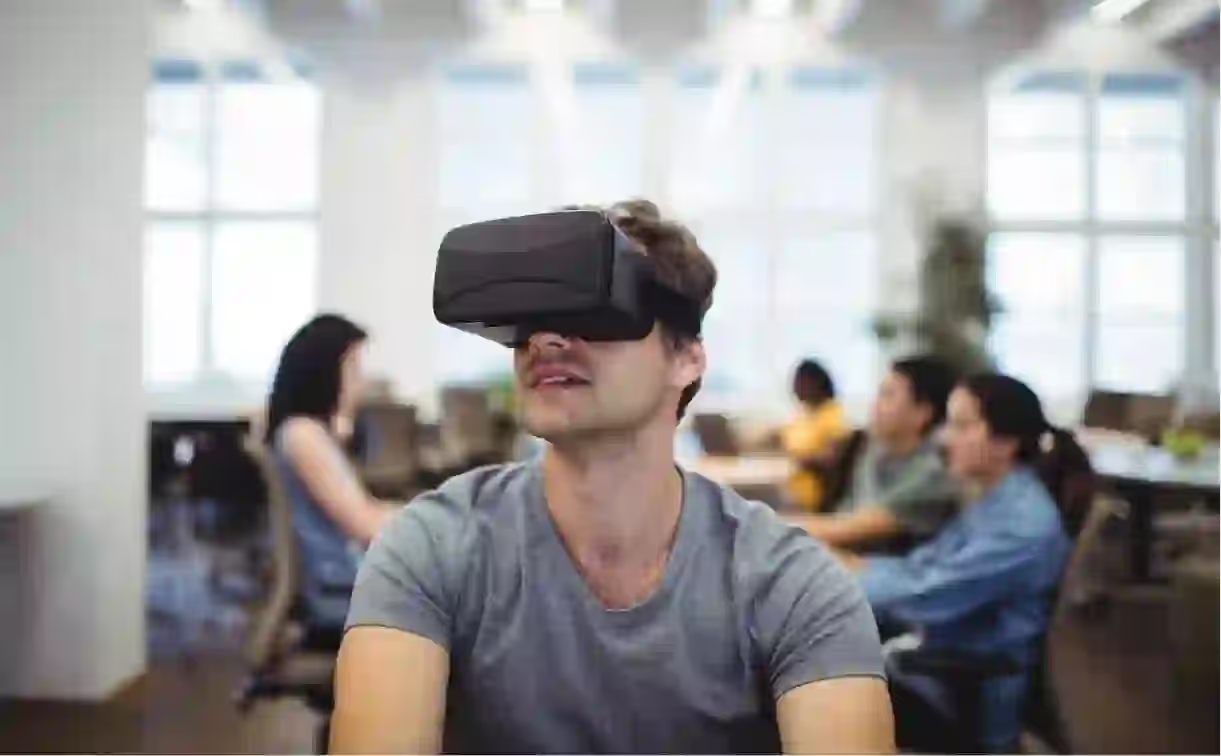
The integration of Virtual Reality (VR) and Augmented Reality (AR) in education marks a fundamental turning point in how knowledge is delivered, experienced, and retained. No longer confined to science fiction or high-end gaming, immersive technologies are becoming powerful tools for education at all levels—from early childhood classrooms to advanced university programs and professional training environments.
This transformation is not a fleeting trend or an experimental concept—it is a global movement driven by real educational needs, rapid technological advancements, and a growing demand for personalized, engaging, and accessible learning. Students today are digital natives who thrive on interactivity and visual stimulation. Traditional chalk-and-talk methods are increasingly ineffective for delivering complex ideas and fostering practical skills. VR and AR bridge this gap by creating immersive, experiential environments that captivate attention, stimulate curiosity, and enhance long-term retention.
For educators and institutions, the adoption of these tools opens up possibilities previously unthinkable. Medical students can perform simulated surgeries with no risk. History classes can take virtual trips to ancient Rome. Engineering students can dismantle and rebuild complex machines without touching physical hardware. Special needs learners can engage with environments tailored to their individual cognitive and emotional profiles. The depth, breadth, and inclusivity of these applications are game-changing.
But perhaps the most exciting dimension lies in the investment landscape. As global education systems face increasing pressure to modernize, the demand for scalable, high-quality EdTech solutions is surging. Governments, schools, universities, and corporate learning departments are actively seeking partnerships and technologies that can help them transition from outdated models to hybrid and immersive approaches. This has led to a massive inflow of capital into EdTech, particularly in VR and AR segments.
Investors are uniquely positioned to catalyze this educational evolution. Strategic investments in hardware development, content creation, platform integration, and teacher training can yield not only strong financial returns but also widespread social impact. Early movers in the space are already seeing rapid growth, with many startups evolving into category leaders or being acquired by global tech giants. Moreover, regions previously underrepresented in educational innovation—such as Latin America, Southeast Asia, and Sub-Saharan Africa—are emerging as promising markets due to mobile-first approaches and government support.
Still, the road ahead is not without challenges. Equitable access to technology, educator readiness, student data privacy, and infrastructure limitations remain critical hurdles. Successful investments will require not just capital but also vision, patience, and a deep understanding of pedagogical needs and regional diversity. Collaborating with academic institutions, educational psychologists, and policymakers will be essential to ensure that the technologies being developed are ethical, effective, and inclusive.
In conclusion, VR and AR in education represent one of the most profound shifts in the way humanity learns. This is not merely a technological upgrade—it’s a paradigm shift. For investors, it is an opportunity to shape the future of global learning, while for educators and students, it is the dawn of a more immersive, equitable, and inspiring era of education. Those who recognize and act on this convergence of innovation and necessity now will be the ones who define the educational ecosystem of tomorrow.
The classroom is no longer limited by walls, location, or physical resources. It is now bound only by the limits of imagination and innovation—and that’s where VR and AR will lead the way.
Related posts
M&A in EdTech: Why Major Tech Companies Are Acquiring Learning Platforms
NOVEMBER 19, 2025
ROI in EdTech: How to measure the effectiveness of educational investments
JUNE 04, 2025
Top 5 Promising U.S. EdTech Startups for Investors in 2025
MAY 29, 2025
Venture Capital in EdTech: Best Practices for Investing
MAY 23, 2025
Exploring Lucrative Startup Investment Opportunities
APRIL 01, 2025