The Psychological Impact of Digital Learning on Students and Employees
NOVEMBER 19, 2025
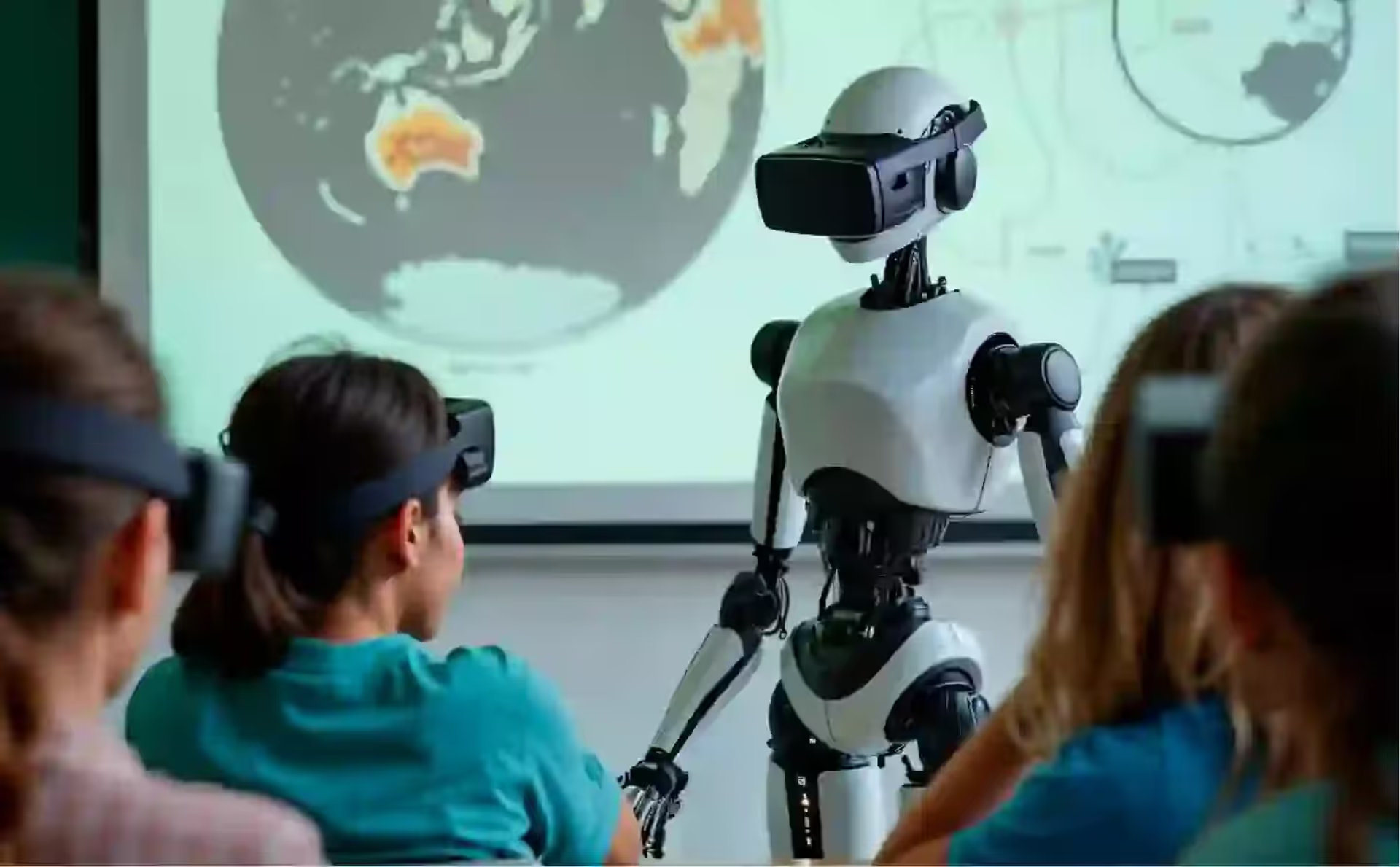
The global education sector is experiencing a paradigm shift, driven by the rapid integration of Artificial Intelligence (AI). What was once a futuristic concept has now become a tangible force, transforming classrooms, curriculums, and the way we think about teaching and learning. This revolution is not confined to a specific region or level of education—it spans across K-12 schools, higher edu cation institutions, online learning platforms, and professional development programs.
At its core, AI in education refers to the use of machine learning algorithms, natural language processing, and data analytics to automate, augment, or support various aspects of teaching and learning. It includes everything from personalized learning pathways and AI-powered tutors to intelligent content recommendation and real-time assessment tools.
A Shift in Educational Dynamics. The role of AI goes far beyond automation. It is fundamentally altering the roles of both students and educators. For learners, AI provides more personalized, accessible, and flexible learning experiences. For teachers, it offers insights into student performance, automates administrative tasks, and opens new avenues for instructional design. Where a traditional classroom model often struggles to accommodate different learning styles, abilities, and paces, AI steps in to individualize instruction. By collecting and analyzing vast amounts of student data—ranging from quiz scores and click patterns to reading speed and participation—AI systems can identify a student’s strengths, weaknesses, and preferred learning modalities. This data-driven insight enables the delivery of tailored content, targeted interventions, and real-time feedback, all of which contribute to improved learning outcomes.
The Rise of EdTech and AI Integration. This transformation is being fueled in part by the explosive growth of the EdTech (Educational Technology) industry. According to industry reports, investmen ts in EdTech surpassed $20 billion globally in recent years, with a significant portion directed toward AI-driven platforms. Companies such as Duolingo, Squirrel AI, and Knewton are leveraging AI to create adaptive learning systems that can mimic human tutors, assess progress instantly, and suggest optimized learning paths. This trend is accelerated by the demand for remote and hybrid learning models—a necessity amplified by the COVID-19 pandemic. With students a nd educators increasingly relying on digital tools, the need for intelligent, responsive educational technologies has never been greater.

Opportunities and Challenges. While the rise of AI in education opens up a world of possibilities, it also presents a series of challenges and ethical considerations. Issues such as data privacy, algorithmic bias, digital inequality, and the potential over-reliance on technology must be carefully addressed. There is also a growing debate about how AI might affect the traditional role of the educator: Will teachers become facilitators, data analysts, or even obsolete? However, many experts believe that the future lies in collaboration, not replacement. AI can handle repetitive tasks, deliver personalized instruction, and analyze performance at scale, but it cannot replicate the empathy, creativity, and human connection that educators bring to the classroom. The ideal model is a human-AI partnership, where technology empowers teachers rather than replaces them.
[banner]
A Glimpse Into the Future.As we look to the future, AI's presence in education is set to grow exponentially. Emerging technologies like generative AI (e.g., ChatGPT), virtual teaching assistants, and emotion recognition software are just the beginning. These innovations will not only enhance how students learn but also redefine how educators teach, design courses, and interact with learners. In summary, the integration of AI into education is not just a trend—it is a transformational force reshaping the very foundation of learning. As this evolution continues, it is essential to strike a balance between innovation and inclusivity, personalization and privacy, automation and human connection.
In the age of artificial intelligence, one of the most transformative innovations in education is the shift from a standardized, one-size-fits-all model to a highly personalized learning experience. AI-powered systems are at the forefront of this change, offering individualized instruction tailored to each student’s pace, proficiency, preferences, and progress.
What Is Personalized Learning? Personalized learning refers to an educational approach that adapts to the unique needs of each learner. Unlike traditional models where all students receive the same instruction, personalized learning ensures that content, methodology, and assessments are customized. This model becomes especially effective when powered by AI, which can process massive datasets and make micro-adjustments in real time. AI-driven platforms analyze a wide range of learner behaviors—such as quiz results, time spent on tasks, response patterns, and even engagement signals like clicks or hesitations—to build dynamic learner profiles. These profiles guide the system in adapting the curriculum: offering simpler explanations when students struggle or advancing them when they excel.
How Adaptive Learning Works
At the core of personalized learning through AI is adaptive learning technology. These platforms utilize algorithms to continuously analyze and respond to student performance. They track how a student interacts with the material, identify learning gaps, and provide immediate feedback and remediation.
For example, ALEKS (Assessment and Learning in Knowledge Spaces), a well-known adaptive learning system, begins wit h an initial diagnostic assessment. This test determines what the student knows and doesn’t know, then customizes a learning path accordingly. As the student progresses, ALEKS recalibrates the pathway in real time—introducing new concepts only when the system deems the student ready. This avoids both redundancy and premature progression, optimizing both efficiency and comprehension.
Another example is DreamBox Learning, which uses AI t o adjust math instruction in real time, analyzing over 40,000 data points per student per hour. By detecting subtle behavioral patterns—such as how long a student hesitates before answering or which problem-solving strategies they prefer—DreamBox creates a personalized math journey that’s tailored not just to what students know, but how they think.
AI-powered personalization is redefining how learning is delivered by making it adaptive, efficient, and tailored to the specific needs of each learner. Unlike traditional models where content is delivered uniformly to all students, AI systems adjust the pace, complexity, and presentation style based on real-time data such as interaction patterns, time spent on tasks, frequency of errors, and user engagement. This creates a dynamic learning environment that continuously evolves according to the learner’s performance and goals.
One of the most significant advantages of this approach is the improvement in learner engagement. When the instructional material is aligned with a learner’s current proficiency level and areas of interest, motivation naturally increases. Artificial intelligence helps maintain an optimal balance between challenge and competency: if a learner progresses quickly, the system introduces more advanced material; if signs of difficulty appear, it provides additional explanations, alternative resources, or adjusts the progression rate. This minimizes frustration and disengagement, while preventing boredom caused by overly simple content.
Personalized learning also leads to higher knowledge retention and deeper comprehension. AI allows learners to spend more time on difficult topics without penalty and reinforces learned concepts through techniques such as spaced repetition and adaptive review cycles. Studies indicate that such tailored instruction can improve mastery of competencies by 30–50% compared with traditional uniform learning pathways, particularly in subjects that rely on progressive skill building such as mathematics, programming, or data analysis.
Another critical benefit is faster remediation and early intervention. In conventional education systems, learning issues are often identified only during summative assessments, by which point knowledge gaps may already be well established. AI-based platforms monitor performance continuously and detect early indicators of misunderstanding or disengagement. They can automatically initiate corrective actions—such as providing hints, altering instructional format, or prompting educator intervention—long before the learner falls significantly behind. This proactive approach enables more efficient problem resolution and helps maintain consistent academic momentum.
AI-driven personalization also contributes to greater equity in learning. By adjusting instruction style and delivery formats to fit individual needs, it supports diverse learners including those with learning disabilities, non-native speakers, and students from varied socioeconomic backgrounds. For example, systems may simplify language for learners with linguistic challenges or offer visual and auditory alternatives for those with processing differences. This flexibility helps level the playing field and promotes inclusive education.
Scalability is another major advantage. Historically, personalized instruction was feasible only with low student-to-teacher ratios. AI makes it possible to deliver tailored learning experiences to thousands or even millions of learners simultaneously—a breakthrough that has led to widespread adoption in massive open online courses (MOOCs) and national digital education platforms. In China, Squirrel AI has implemented adaptive learning technology across thousands of schools, reporting significant improvements in student performance. Similarly, platforms like Khan Academy use AI to personalize lessons for millions worldwide. Many educational institutions are now integrating AI-based analytics into their Learning Management Systems, such as Moodle and Canvas, giving teachers access to detailed dashboards with real-time insights that support data-informed instructional decisions.
AI-powered personalization is extending beyond academic performance to emotional responsiveness through emerging technologies such as affective computing. By analyzing facial expressions, voice tone, or even typing behavior, these systems can detect signs of frustration, boredom, or confusion. When learner disengagement is detected, the system may suggest a break, change the lesson format, or deliver motivational prompts. Early-stage platforms like Querium are already implementing this approach, adjusting content delivery proactively to re-engage the learner. While still evolving, emotional personalization has the potential to significantly enhance learning relevance and empathy.
Despite the substantial capabilities of AI, it is not a replacement for educators. The most successful implementations occur when AI provides the scaffolding for personalization and data analysis, while teachers interpret the insights, offer encouragement, and supply the emotional and contextual understanding that technology cannot replicate. In this model, AI amplifies instructional impact, and educators provide the human connection necessary for sustainable learning success.
As artificial intelligence continues to revolutionize education, one of the most promising applications is the development of Intelligent Tutoring Systems (ITS)—AI-powered platforms designed to simulate the experience of having a dedicated personal tutor. These systems deliver real-time feedback, adaptive guidance, and step-by-step explanations, effectively mimicking the role of a skilled human instructor.
What Are Intelligent Tutoring Systems? An Intelligent Tutoring System is an advanced AI solution that monitors student interactions, diagnoses learning needs, and provides tailored instruction. Unlike traditional digital learning tools that deliver static content, ITS platforms engage in an interactive, dialogic process, adjusting their strategies dynamically based on the learner’s performance and behavior.
These systems rely on a combination of technologies, including:
Natural Language Processing (NLP) to interpret written or spoken s tudent responses.
Machine Learning to predict student outcomes and adapt future instruction.
Cognitive Modeling to simulate how learners process information.
Real-Time Analytics to assess performance and personalize instruction instantly.
Artificial intelligence is reshaping education at a profound level, and one of its most transformative applications is the rise of Intelligent Tutoring Systems (ITS)—AI-driven platforms designed to simulate the experience of having a dedicated personal tutor. These systems offer real-time feedback, adaptive guidance, and step-by-step instruction, replicating the highly effective one-on-one teaching model that has historically been limited by resource constraints.
What Are Intelligent Tutoring Systems?
An Intelligent Tutoring System is an advanced AI solution capable of analyzing student interactions, diagnosing knowledge gaps, and dynamically adjusting instruction to fit individual needs. Unlike traditional digital learning platforms that simply deliver static content, ITS engages in a dialogic and interactive instructional process. It continuously evaluates learner responses and adapts feedback, explanations, or task difficulty based on behavior and performance.
To achieve this level of personalization, ITS typically combines multiple AI technologies:
This combination enables ITS to respond to learners similarly to how a human tutor would—guiding them through concepts, correcting misconceptions, and adjusting the pace to ensure deep understanding.
Research consistently shows that personalized tutoring is one of the most effective teaching methods, often leading to substantially improved learning outcomes. ITS aims to replicate this by breaking down complex concepts into manageable steps and providing structured scaffolding.
For example, a student solving a mathematics problem within an ITS platform receives targeted prompts as they proceed through each step. The system tracks their input moment by moment. If incorrect reasoning or skipped steps are detected, it may offer a hint, rephrase the question, or suggest a different strategy. Once the learner completes the task, the system generates a performance analysis and adjusts future lesson complexity accordingly. This continuous adaptive cycle ensures that instruction remains highly relevant to the learner’s current competency level.
Carnegie Learning: A Leading Practical Example
One of the most prominent examples of Intelligent Tutoring Systems in action is Carnegie Learning, originally developed at Carnegie Mellon University. Its flagship software, MATHia, uses cognitive models to replicate student thinking in mathematics.
The platform personalizes instruction by:
Rather than merely supplying answers, Carnegie Learning’s ITS guides learners through problem-solving processes, strengthens conceptual understanding, and promotes metacognitive skills such as self-monitoring and persistence—critical for long-term academic success.
Expanding Beyond STEM: New Applications
While ITS began primarily in structured subjects like mathematics and computer science, its applications are expanding into broader domains.
These examples highlight how ITS can support both academic learning and cognitive development, making it a valuable companion in hybrid classrooms, self-paced learning models, and after-school support programs.
Benefits of Intelligent Tutoring Systems
The rise of Intelligent Tutoring Systems offers a wide range of educational advantages:
By blending AI capabilities with pedagogical best practices, ITS makes scalable individualized teaching feasible.
While AI introduces new tools for personalized learning, it also serves as a valuable resource for educators, reshaping their roles from information providers to learning facilitators and strategic mentors. By automating time-consuming administrative tasks—such as grading, attendance tracking, and performance reporting—AI significantly reduces teacher workload, freeing up more time for meaningful interaction with students and thoughtful instructional planning. This shift allows educators to devote more energy to classroom engagement, differentiated instruction, and emotional support, which are areas where human connection remains irreplaceable.
One prominent example comes from South Australia, where AI-powered chatbots have been implemented to assess the English language proficiency of newly arrived migrant students. These systems conduct initial diagnostics using natural language processing, enabling quick, objective evaluations while reducing the hours teachers would typically spend on individual assessments. As a result, teachers can allocate more time to building inclusive classroom environments and tailoring lessons for diverse cultural and linguistic backgrounds.
Beyond language assessment, AI-driven platforms provide teachers with real-time analytics dashboards that offer deep insights into student performance and behavioral trends. For instance, an AI system might identify a student who performs well on quizzes but struggles with retention over time, prompting the teacher to intervene with targeted review sessions. Other platforms track participation and engagement, highlighting which students may be falling behind socially or academically. These insights transform the teacher’s role into that of a data-informed guide who can proactively support students before minor challenges become major obstacles.
Moreover, AI tools can recommend personalized resources for teachers themselves, helping them improve their own professional development. Adaptive learning systems for educators suggest pedagogical strategies, lesson plans, or continuing education modules based on classroom dynamics and performance outcomes. This feedback loop ensures that teacher growth evolves in tandem with student needs, creating a more responsive and agile educational environment.
Importantly, AI does not aim to replace educators but to amplify their impact. It augments their capabilities by taking over repetitive and diagnostic functions, thereby reinforcing the human elements of teaching—empathy, creativity, mentorship, and motivation. As AI continues to mature, educators are likely to become orchestrators of increasingly complex learning ecosystems, empowered by technology to deliver instruction that is more personalized, inclusive, and efficient than ever before.
Despite the many advantages that Artificial Intelligence brings to education, its widespread integration is not without significant challenges and nuanced considerations. While AI promises greater efficiency, personalization, and scalability, it also introduces ethical, technical, and pedagogical concerns that must be carefully navigated to ensure responsible and equitable implementation.
One of the foremost challenges is data privacy and security. AI systems rely heavily on vast amounts of student data to function effectively—ranging from academic performance to behavioral patterns and even emotional indicators. This data is often sensitive, and its collection, storage, and use must be handled with utmost care. Educational institutions and EdTech providers must comply with data protection regulations, such as GDPR or FERPA, and establish robust cybersecurity frameworks to prevent breaches, unauthorized access, or misuse of student information. Transparency in data handling policies and clear communication with parents, students, and educators is essential to building trust in AI-driven education systems.
Another pressing issue is algorithmic bias. AI models are only as unbiased as the data they are trained on. If historical data reflects social, economic, or racial disparities, there is a risk that these biases will be perpetuated or even amplified by AI algorithms. For instance, an AI system used for student placement or performance prediction could unintentionally favor students from certain backgrounds while disadvantaging others. To counter this, developers must actively seek diverse datasets, audit algorithms regularly for fairness, and include diverse voices—particularly educators and underrepresented communities—in the design and testing processes.
Depersonalization of learning is another critical concern. While AI excels at delivering customized content and tracking student progress, it lacks the emotional intelligence, empathy, and contextual understanding that human teachers provide. There is a risk that an over-reliance on AI could lead to overly mechanized learning experiences, where students feel more like data points than individuals. Human connection is fundamental to education; it fosters motivation, emotional well-being, and deeper cognitive development. Teachers help students build confidence, navigate complex social dynamics, and develop a sense of purpose—roles that AI cannot replicate.
Moreover, technology access and digital inequality remain significant barriers, particularly in low-income regions or underserved communities. While AI tools promise personalized learning for all, the reality is that access to the necessary infrastructure—devices, internet connectivity, and digital literacy training—is still uneven. This disparity can widen the educational gap rather than close it, unless deliberate efforts are made to invest in inclusive infrastructure and provide equitable access.
Another consideration is the evolving role of educators. Teachers must be adequately trained not only to use AI tools but also to interpret their outputs, integrate them effectively into lesson planning, and maintain a human-centered approach to teaching. Without professional development and ongoing support, educators may feel overwhelmed or displaced by technology, leading to resistance or misuse of AI systems. Hence, educational institutions must prioritize teacher empowerment and collaboration in the adoption of AI, positioning them as co-designers of the learning experience rather than passive users.
Finally, ethical oversight and policy frameworks are essential to guide the responsible use of AI in education. Governments, academic institutions, and private sector partners need to collaborate on setting standards for transparency, accountability, and ethical conduct. This includes creating mechanisms for redress in cases where AI decisions have unintended consequences and ensuring that AI implementation aligns with the broader goals of education—equity, inclusion, and the holistic development of learners.
In conclusion, while AI holds transformative potential for the education sector, its deployment must be approached with thoughtful consideration of its limitations and risks. A balanced approach—where AI complements rather than replaces human educators—will be key to creating a future-ready education system that is both technologically advanced and deeply human-centered.
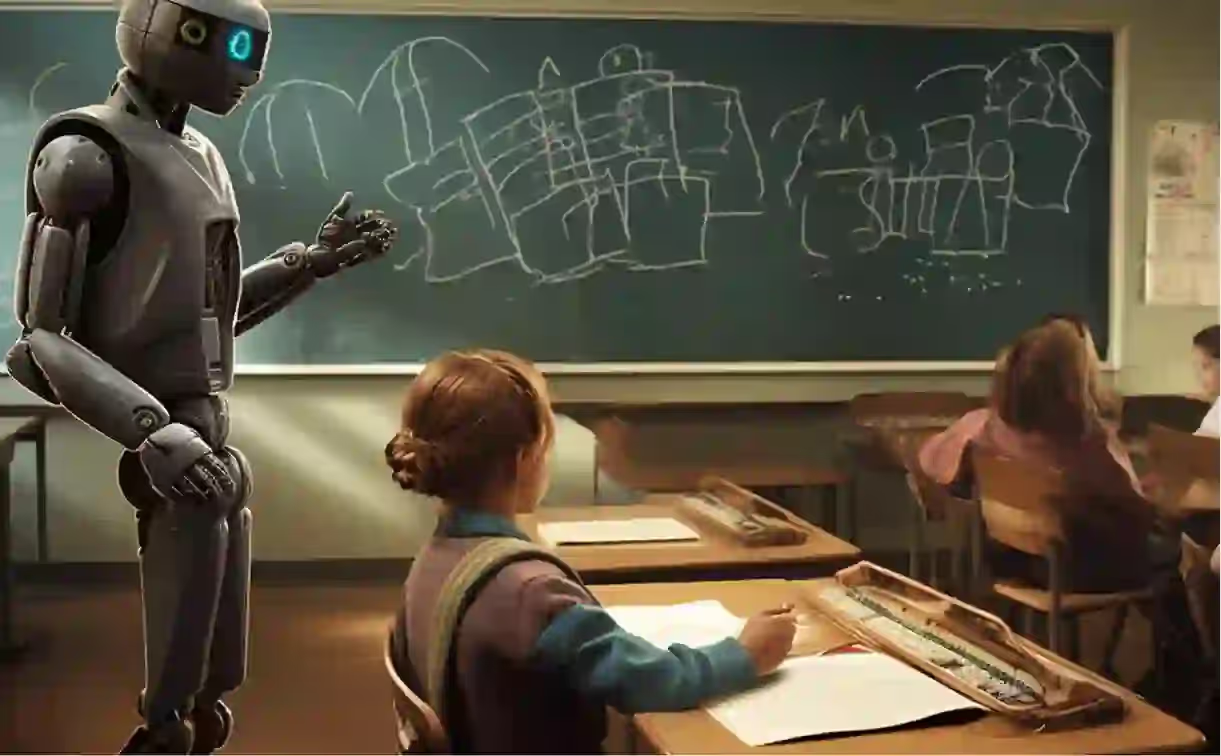
The rapid advancement of Artificial Intelligence (AI) in education has ignited a new wave of investment in educational technology (EdTech), transforming the landscape of learning on a global scale. As AI continues to redefine how knowledge is delivered, measured, and personalized, both public and private sectors are recognizing the immense potential of EdTech not just as a technological evolution, but as a catalyst for a more inclusive and effective education system.
Over the past decade, investment in EdTech has surged, with billions of dollars flowing into startups and established companies alike. Venture capital firms, philanthropic organizations, and government bodies are backing platforms that promise to leverage AI for smarter learning. For instance, companies like GyanDhan have received significant funding to develop solutions that democratize access to higher education by combining financial support tools with AI-powered learning resources. These investments aim to dismantle traditional barriers to education—such as high tuition costs, limited access to qualified teachers, or geographic isolation—by creating scalable, technology-driven alternatives.
The growth of adaptive learning platforms has been one of the most prominent outcomes of this investment trend. These platforms use AI algorithms to analyze student performance in real time and dynamically adjust content delivery based on each learner’s pace, strengths, and areas of difficulty. By offering tailored pathways instead of one-size-fits-all curricula, EdTech enables students from diverse backgrounds to receive instruction that truly meets their individual needs. This is particularly transformative for learners in underserved communities or those with learning disabilities, where traditional education methods often fall short.
Investors are also channeling funds into intelligent tutoring systems (ITS)—automated programs that replicate the personalized feedback and support of human tutors. These systems, once a futuristic concept, are now being deployed across schools and universities to enhance instruction in complex subjects like mathematics, coding, and science. For example, Carnegie Learning’s ITS has demonstrated improved learning outcomes by offering real-time feedback, scaffolding, and remediation based on students’ specific problem-solving behavior.
Beyond individual learners, EdTech investment is also driving innovation in teacher support tools, professional development, and curriculum design. Platforms are being developed to help educators analyze class-wide learning trends, design differentiated lesson plans, and engage students with multimedia-rich content. With AI handling administrative burdens—such as grading quizzes or tracking attendance—teachers can redirect their time and energy toward more meaningful educational interactions.
Crucially, this investment boom is helping to bridge educational equity gaps by funding tools that are mobile-friendly, low-bandwidth optimized, and available in multiple languages. These features are essential in reaching students in rural or low-income areas, where access to traditional schooling or high-end digital infrastructure is limited. AI-enabled EdTech platforms thus act as digital equalizers, extending high-quality education to previously unreached populations.
Moreover, the interest in EdTech is not just limited to financial returns—it’s also seen as a long-term investment in human capital and national development. Countries are increasingly viewing education technology as a strategic tool for future-proofing their workforce and strengthening economic competitiveness. As a result, we see growing government initiatives that support EdTech startups, offer public-private collaboration models, and integrate AI-driven tools into national curriculums.
However, to maximize the potential of EdTech investments, there must be a strong focus on responsible innovation. Stakeholders must ensure that the technologies being developed are pedagogically sound, ethically grounded, and inclusively designed. This includes engaging educators and learners in the product design process, applying rigorous research methodologies to evaluate effectiveness, and establishing clear policies around data privacy and student protection.
In conclusion, investing in EdTech is more than a market trend—it is a movement toward reshaping the future of education. With AI at its core, EdTech holds the promise of a more personalized, accessible, and resilient educational system. The strategic deployment of funding and innovation in this space has the power to uplift learners globally, empower educators, and build societies where quality education is not a privilege for the few, but a right for all.
As we stand at the intersection of technological innovation and educational transformation, it becomes increasingly clear that Artificial Intelligence is not a distant vision, but a present force reshaping the way we teach and learn. From personalized learning pathways powered by adaptive platforms to intelligent tutoring systems offering real-time feedback, AI is revolutionizing education by putting the learner at the center and equipping educators with powerful tools to enhance their practice.
Yet, amid the enthusiasm and investment, it's essential to recognize that technology alone is not a panacea. The true power of AI in education lies not in replacing human educators, but in collaborating with them—amplifying their ability to reach every student, adapt instruction, and foster deep, meaningful learning experiences. Teachers bring emotional intelligence, ethical judgment, cultural understanding, and the human connection that AI, no matter how advanced, cannot replicate.
A successful future for AI in education must be deeply collaborative and ethically grounded. This means involving educators, students, parents, policymakers, and developers in co-designing systems that are transparent, fair, and aligned with educational values. It also requires rigorous safeguards for student data privacy, efforts to reduce algorithmic bias, and strategies to ensure equitable access—particularly for marginalized and underrepresented communities.
Moreover, AI should be viewed as a partner in education, one that supports differentiated instruction, enables early intervention, and frees up educators’ time for what matters most: nurturing curiosity, critical thinking, empathy, and creativity in their students. When used wisely, AI can help create more inclusive, flexible, and resilient learning environments—ones that prepare students not just for tests, but for life in an ever-changing world.
In the years ahead, education systems will increasingly need to balance the strengths of machine intelligence with the irreplaceable qualities of human mentorship. This balance will not be achieved through competition between AI and teachers, but through cooperation that combines the precision of algorithms with the warmth and wisdom of human guidance.
Ultimately, the question is not “AI tutor or live teacher?”—but rather, how do we design an ecosystem where both work in harmony to serve the diverse needs of learners. If we answer this challenge thoughtfully and inclusively, we can build an educational future that is not only more efficient and personalized but also more humane and just.
Related posts
The Psychological Impact of Digital Learning on Students and Employees
NOVEMBER 19, 2025
Technologies and Teachers: Support or Replacement? Ethical Dilemma
JUNE 03, 2025
What EdTech technologies are poised for explosive growth in the next 5 years?
MAY 29, 2025
How the Pandemic Accelerated the Growth of the EdTech Market
MAY 27, 2025
Virtual and Augmented Reality in Education
MAY 23, 2025