Top 5 EdTech Trends Shaping the Future of Learning in 2025–2030
NOVEMBER 19, 2025

Artificial Intelligence (AI) is no longer just the stuff of science fiction. It's a reality that's making its way into classrooms around the world. But what does this mean for education? How does AI help students, and why should it be allowed in schools? This article explores the pros of using AI in education, highlighting its benefits and answering some crucial questions about its role in modern learning environments.
Artificial intelligence has emerged as a transformative force in education, reshaping how students learn, how teachers teach, and how institutions operate. Far beyond being a technological enhancement, AI is becoming a core driver of educational innovation, enabling more inclusive, efficient, and personalized learning environments. From adaptive learning platforms to intelligent automation systems, AI is setting new standards for academic performance, student engagement, and operational sustainability. Below, we explore the most impactful benefits AI brings to modern classrooms.
One of the most powerful advantages of AI in education is its ability to tailor learning experiences to individual needs. Unlike traditional instruction methods that apply a one-size-fits-all approach, AI analyzes student progress, identifies knowledge gaps, and dynamically adjusts learning pathways based on performance trends. Intelligent platforms can recommend targeted exercises, additional resources, or accelerated modules depending on whether a student is struggling or excelling. By adapting the difficulty level and pace, AI ensures that learners remain challenged yet not overwhelmed, optimizing learning outcomes and boosting motivation.
Instead of waiting for scheduled assessments or teacher evaluations, students using AI-powered systems receive feedback instantly after completing assignments or quizzes. This rapid reflection allows them to correct misconceptions immediately and continue progressing without delays. Moreover, AI is capable of detecting preferred learning styles—visual, auditory, kinesthetic, or a combination—by analyzing user interaction patterns. It then customizes how information is presented, using videos, interactive graphics, voice explanations, or simulations, improving retention and overall comprehension.

Educators often face heavy administrative burdens, limiting the time available for quality interaction with students. AI helps reduce this workload by automating routine tasks such as grading assignments, recording attendance, scheduling, and resource distribution. Advanced grading systems can assess multiple-choice questions instantly and even analyze open-ended responses using natural language processing, delivering objective and consistent evaluations. AI-based attendance monitoring tools using facial recognition further streamline classroom management. By reallocating time from paperwork to mentorship and curriculum refinement, teachers can focus on delivering higher-quality learning experiences.
AI significantly improves educational access for students with disabilities. Assistive technologies such as speech-to-text tools support learners with hearing impairments, while AI-powered text-to-speech systems help visually impaired students engage with academic materials. Real-time language translation enables multilingual classrooms to thrive by breaking communication barriers. Additionally, AI can adapt content—such as simplifying sentence structures or modifying visuals—for students with cognitive or learning disabilities, creating equitable opportunities for all learners.
To increase motivation and maintain student interest, AI enhances the learning environment through engaging and interactive features. Gamification software integrates point systems, badges, challenge-based levels, and leaderboards, transforming learning into a goal-driven experience that increases persistence and participation. AI also powers immersive VR and AR learning environments, allowing students to explore historical landmarks, perform virtual scientific experiments, or interact with complex systems in a risk-free digital lab. Intelligent simulations provide hands-on learning opportunities, replacing passive observation with active engagement, and helping students develop critical thinking through experimentation.
The impact of AI in education extends far beyond convenience—it is redefining the very fabric of teaching and learning. By enabling personalization at scale, streamlining administrative tasks, promoting inclusivity, and driving interactive engagement, AI equips both educators and students with tools that improve performance and enhance learning experiences. As AI technologies continue to evolve, classrooms will become more adaptive, data-informed, and future-ready, preparing students not only to succeed academically but also to thrive in an AI-powered world.
Artificial Intelligence is not only transforming how educators teach—it is revolutionizing how students learn. By creating highly adaptive, interactive, and data-driven learning environments, AI technologies are helping learners achieve deeper understanding, sustained motivation, and long-term academic success. Unlike traditional education models that rely on standardized pacing and uniform content delivery, AI enables learning experiences that evolve in real time based on student needs, engagement levels, and performance data. This shift from static lessons to responsive, intelligent learning ecosystems marks one of the most significant advancements in modern education.
AI enhances learning by making it adaptive, personalized, and proactive. It helps students engage more deeply with content, gives educators powerful tools to support their unique learning needs, and enables institutions to refine teaching strategies based on actionable insights. With AI, education shifts from a static, standardized model to a dynamic, responsive system that empowers learners to achieve their full potential—on their own terms and at their own pace.
As artificial intelligence becomes increasingly integrated into modern life and global industries, its role in education is not just beneficial—it is essential. Schools that embrace AI today are equipping their students with the tools, mindset, and competencies required to thrive in the digital economy of tomorrow. Rather than replacing educators, AI acts as a strategic partner that enhances teaching effectiveness, supports diverse learners, and prepares students for the future. Below are the key reasons AI should be fully embraced in educational environments.
Preparing Students for a Future-Driven by Technology. The world is rapidly transitioning toward AI-powered systems, and students who are familiar with these technologies will be better equipped to excel in future job markets. Understanding AI not only opens pathways to high-demand fields such as data science, robotics, and machine learning but also provides students with an adaptive mindset crucial for navigating technological evolution. Early exposure to AI promotes technological literacy, giving learners the confidence to interact with emerging digital tools and adapt to innovations throughout their careers.
Workforce Readiness and Career Opportunities. AI education fosters practical, future-oriented skills that employers increasingly expect. By learning how AI operates—its capabilities, limitations, and real-world applications—students gain a competitive edge across multiple sectors, from business and healthcare to engineering and creative industries. AI literacy helps young professionals understand automation trends, collaborate effectively with AI-powered systems, and position themselves as innovators rather than mere users of technology.
Igniting Innovation, Curiosity, and Entrepreneurial Thinking. AI tools encourage students to approach learning with experimentation and creativity. Whether through AI-assisted design platforms, coding environments, or predictive modeling tools, students are inspired to challenge conventions and innovate. These experiences nurture entrepreneurial thinking, leading students to imagine not just how to use existing technologies, but how to create new ones. AI-powered platforms often simulate real-world challenges, prompting students to ideate, test, fail, and refine—mirroring processes used by tech innovators and startup founders.
Fostering Critical and Analytical Thinking. AI promotes problem-solving by exposing students to complex, multi-layered scenarios that require strategic thought. For example, simulations powered by AI can present realistic dilemmas in fields like economics, engineering, or medicine, requiring students to analyze data, weigh options, and make informed decisions. These experiences sharpen analytical thinking, logical reasoning, and creativity—all essential capabilities in a fast-changing world. AI also supports inquiry-based learning, encouraging students to ask questions, explore answers independently, and develop the confidence to learn outside of structured systems.
Empowering Teachers, Not Replacing Them. One of the greatest misconceptions surrounding AI in education is the idea that it aims to replace teachers. In reality, AI is most powerful when used to support and enhance the teacher’s role. By automating administrative and repetitive tasks such as grading, attendance monitoring, and progress reporting, AI allows teachers to focus more on student engagement, mentorship, and personalized instruction.
Educators can use AI-generated insights to identify learning gaps early, recognize patterns in performance, and adapt their teaching strategies accordingly. This combination of human empathy and AI-driven precision results in more effective and responsive teaching.
Increasing Teaching Efficiency and Educational Quality. AI enhances classroom productivity by streamlining planning, resource allocation, and data assessment. Teachers can access AI-powered analytics to tailor lesson plans to student needs, track learning outcomes, and refine instructional strategies. In essence, AI helps educators work smarter rather than harder, making the overall educational experience more rewarding for both teachers and students.
Allowing AI in schools is not simply a matter of using new tools—it is about future-proofing education. By integrating AI into the learning process, schools are building environments that:
Rather than being optional, AI in education is becoming a strategic imperative. When implemented responsibly and ethically, it transforms classrooms into dynamic, adaptive learning ecosystems that prepare students not just for tomorrow’s jobs, but for lifelong success in a technology-driven world.
[banner]
Artificial Intelligence is no longer a futuristic concept—it is already reshaping education at multiple levels, from K–12 classrooms to higher education institutions and corporate training environments. By enabling intelligent automation, real-time insights, and personalized learning, AI tools are transforming how teaching and learning are delivered. Below are some of the most impactful real-world applications demonstrating the power of AI in modern education.
AI-Powered Language Learning Apps: Personalized, Interactive, and Effective
One of the most widespread and successful examples of AI in education is found in language learning platforms such as Duolingo, Babbel, and Memrise. These apps use machine learning algorithms to assess user performance, detect knowledge gaps, and adapt lesson difficulty dynamically. Rather than following a static course structure, learners are guided through a personalized pathway that evolves as they progress.
AI enables the following key capabilities:
This approach has made language learning more accessible, scalable, and interactive, increasing engagement across all demographics—from school children to professionals seeking new career opportunities.
Automated Essay Scoring: Efficient, Fair, and Insightful
Several educational institutions and standardized testing organizations now use AI-driven essay scoring platforms to evaluate written assignments. While these systems do not replace the nuanced judgment of experienced educators, they play an invaluable role in initial assessments and scalability.
AI-driven essay evaluation offers multiple advantages:
Platforms such as Turnitin Revision Assistant, ETS e-rater, and Gradescope are widely used for automated assessment, especially in higher education and standardized testing environments.
AI-Enhanced Virtual Classrooms: Interactive and Data-Driven
With the rise of hybrid and remote learning models, AI-powered virtual classroom platforms—such as Canvas with AI add-ons, Knewton, or Google Classroom with AI integrations—have become indispensable in maintaining student engagement and teaching effectiveness.
These AI-based features make virtual learning more immersive and impactful:
In many cases, AI also supports behavioral analytics, identifying students at risk of falling behind and recommending interventions.
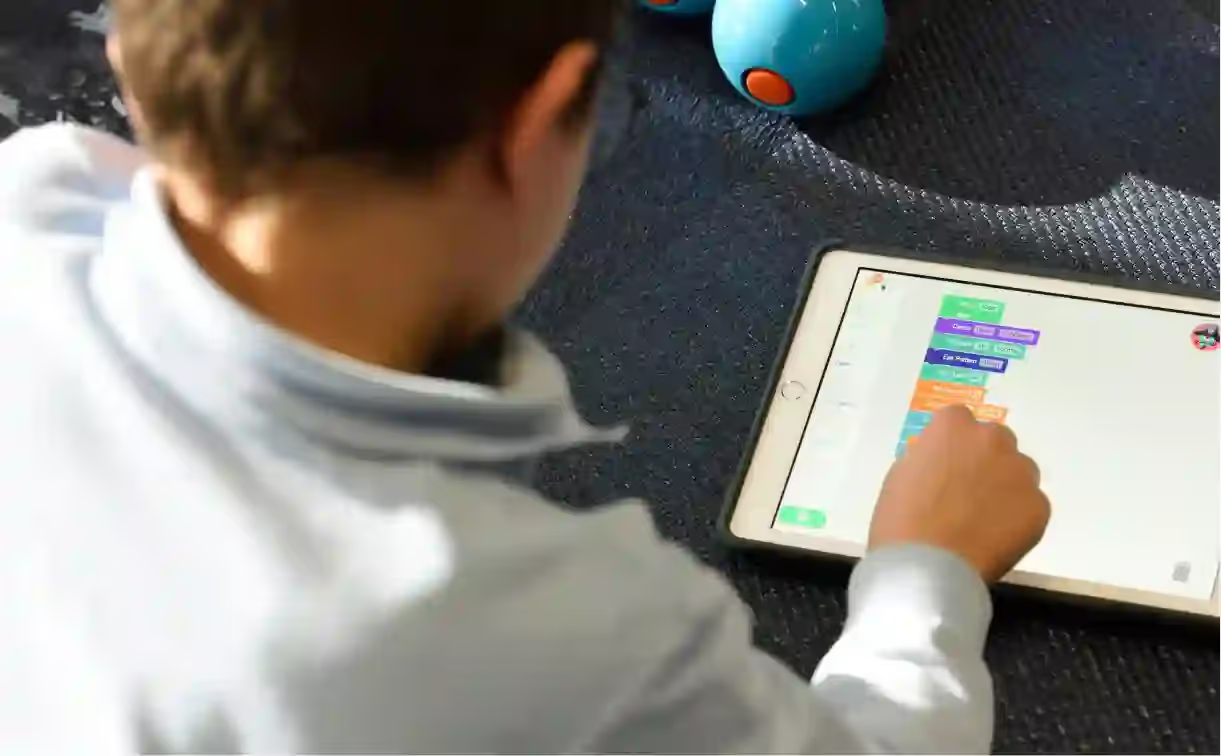
While the benefits of incorporating artificial intelligence into education are substantial, its implementation also introduces a range of challenges that must be carefully addressed to ensure responsible, ethical, and effective use. Schools, universities, and EdTech providers need to strike a balance between innovation and accountability, prioritizing data protection, equitable access, teacher readiness, and transparency in AI-driven decision-making.
One of the most critical concerns is data privacy and security. AI systems rely heavily on collecting and analyzing student information—such as performance metrics, learning behavior, interaction patterns, and even emotional responses—to generate insights and personalize learning. To safeguard this sensitive data, educational institutions must comply with established regulations such as GDPR (General Data Protection Regulation) in Europe and FERPA (Family Educational Rights and Privacy Act) in the United States. In addition to legal compliance, AI platforms must incorporate secure data storage and encryption protocols to prevent unauthorized access, cyberattacks, or data leaks. Building trust with students and parents depends on clearly communicating how data is handled and ensuring that AI is used strictly to improve learning outcomes.
Closely tied to privacy is the need for ethical use of data. Institutions must maintain transparency about how AI systems make recommendations or decisions, avoiding practices that could lead to biased or unfair outcomes. Algorithmic bias remains a real concern—if AI models are trained on limited or non-representative datasets, they may inadvertently reinforce inequalities. To prevent this, AI solutions should undergo regular auditing, and developers must prioritize diversity and fairness in model training and deployment.
Another pressing issue is equity and access. Not all schools have the infrastructure or funding to adopt AI-enhanced technologies, which risks widening the digital divide. While some institutions benefit from advanced platforms and well-trained staff, others struggle with limited connectivity or outdated equipment. To ensure inclusive implementation, educational leaders must collaborate with policymakers, technology providers, and private investors to bridge resource gaps. Strategies may include subsidized technology programs, infrastructure development in underserved regions, and designing AI tools that accommodate varying device capabilities, learning environments, and student needs, including those with disabilities.
Equally important is the readiness of educators. AI is not meant to replace teachers but to empower them. However, without proper training, even the most innovative tools may fail to deliver impact. Teachers need ongoing professional development programs that cover both technical competencies and pedagogical strategies for integrating AI. This includes understanding how to interpret AI-generated analytics, adapt instruction accordingly, and maintain the human connection that is vital to student engagement. Continuous skill-building ensures that educators remain confident using AI tools and can serve as facilitators of meaningful, technology-enhanced learning.
Ultimately, the successful adoption of AI in education requires not just technological advancement, but also thoughtful governance, stakeholder involvement, and a strong emphasis on human values. AI should amplify—not diminish—the role of the teacher and should serve as a tool to improve student outcomes, personalization, and access to quality learning.
When implemented with transparency, inclusivity, and ethical responsibility, artificial intelligence has the power to transform education sustainably. However, it must be introduced with careful planning, clear regulation, and a commitment to maintaining equity and trust across all educational environments.
Artificial Intelligence is no longer a futuristic concept—it is an active force reshaping classrooms and redefining learning experiences across the globe. Its integration into education marks a critical shift from standardized instruction toward intelligent, adaptive systems that prioritize individual growth, engagement, and long-term success. Rather than acting as a replacement for educators, AI serves as a powerful ally, enhancing teaching capabilities, expanding access to quality education, and empowering students to learn in ways that align with their strengths, pace, and aspirations.
By delivering personalized learning pathways, offering real-time feedback, and supporting self-paced progress, AI helps students overcome learning barriers and develop higher levels of competence with greater confidence. Intelligent tutoring systems and dynamic content delivery ensure that learning is not only effective but also deeply engaging. Furthermore, AI-enabled tools such as virtual simulations, gamification platforms, and assistive technologies break traditional boundaries and make learning more immersive and inclusive, benefiting students of diverse backgrounds, abilities, and learning styles.
For educators, AI acts as a strategic partner—automating administrative tasks, streamlining assessment processes, and generating data-driven insights that enable informed decision-making. By reducing workload inefficiencies, AI gives teachers more time to focus on mentorship, creativity, and meaningful human interaction, reinforcing their invaluable role in the learning journey.
However, the true potential of AI in education can only be realized through responsible adoption. Institutions must prioritize data protection, ethical use of information, teacher training, and equitable access to technology. AI should be integrated with clear governance, transparent operation, and inclusive design, ensuring it supports every student without reinforcing existing inequalities.
Ultimately, embracing AI in education is not just about staying technologically relevant—it is about preparing learners for a future where adaptability, innovation, and lifelong learning are essential. As AI continues to evolve, classrooms will become more responsive, data-informed, and globally connected, fostering critical thinking, digital competence, and creativity in the next generation.
Now is the time for policymakers, educators, EdTech developers, and investors to collaborate in building AI-driven learning environments that are not only efficient but also human-centered. By doing so, we pave the way for educational systems that are smarter, more accessible, and better equipped to help students thrive in an AI-powered world.
In essence, when implemented thoughtfully and ethically, AI doesn't just enhance education—it transforms it. And the classrooms that adapt today will build the innovators, problem-solvers, and leaders of tomorrow.
Related posts
Top 5 EdTech Trends Shaping the Future of Learning in 2025–2030
NOVEMBER 19, 2025
Subscription Education: The Netflix Approach to Learning
JUNE 02, 2025
Microlearning and Gamification: Trends in Professional Development
MAY 28, 2025
AI in Career Development: Personalized Recommendations
MAY 26, 2025
Top Online Learning Tools for Students
MAY 22, 2025